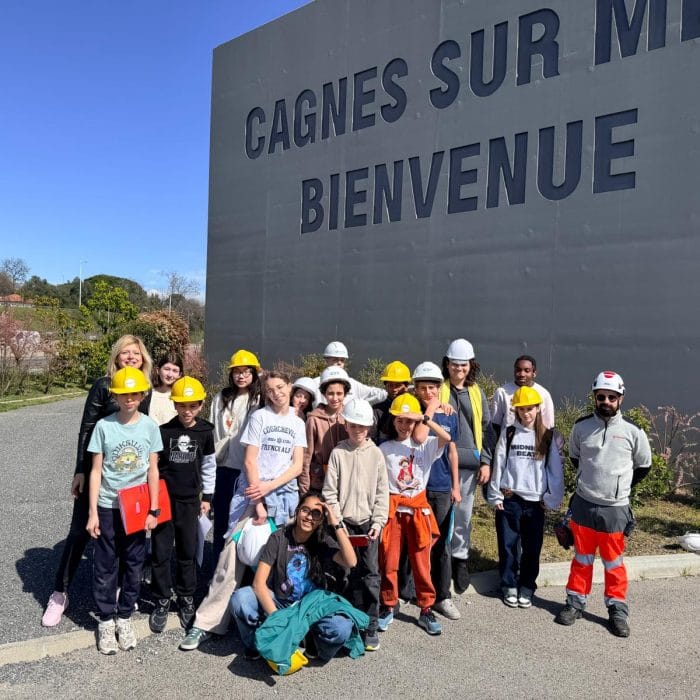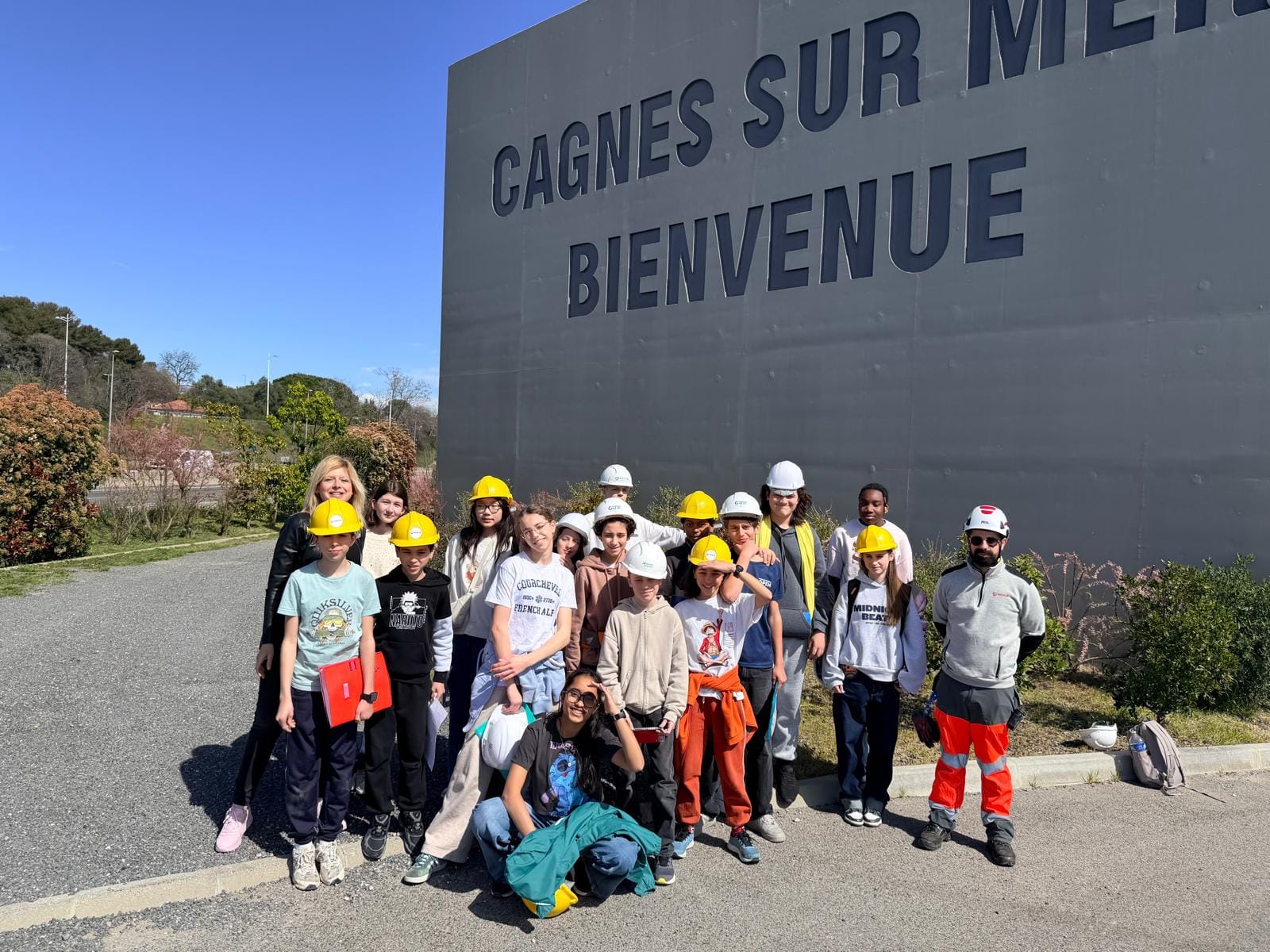
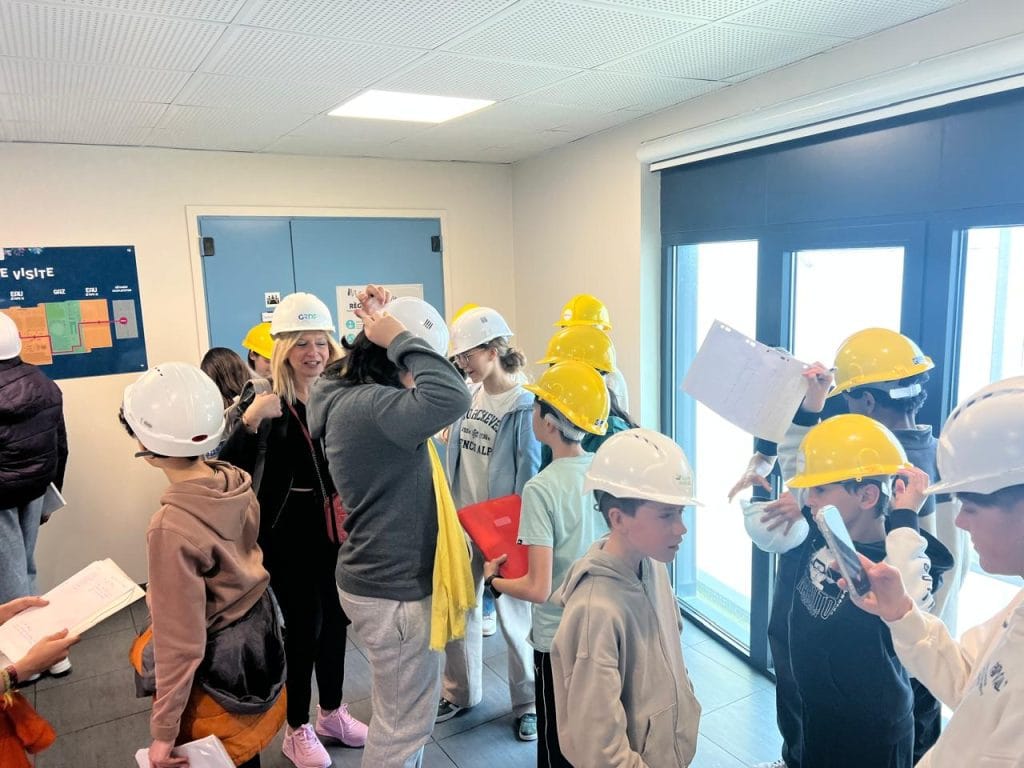
The Year 8 students recently had the opportunity to visit the Aeris wastewater treatment plant in Cagnes-sur-Mer. This educational and surprising outing allowed them to better understand the essential role of wastewater treatment in environmental protection.
Understanding the journey of water after its use
Upon our arrival at the site, we were warmly welcomed by the Aeris team, who explained how the station works and the different stages involved in treating wastewater before it is returned to the natural environment.
The students discovered that the water used daily in our homes, schools, and businesses doesn't simply disappear when it flows down the drain. It is transported to a wastewater treatment plant where it undergoes several treatments designed to remove pollutants and harmful substances.
An immersion into the heart of the treatment process
Throughout the visit, the students were able to observe the different stages of wastewater treatment.
They discovered how water is progressively filtered, cleaned, and disinfected before being safely released back into the sea. This hands-on experience allowed them to better understand the challenges related to preserving natural resources and protecting the environment.
One of the most striking aspects of the visit was discovering the advanced technologies and scientific knowledge used to guarantee water quality. The students were impressed by the expertise and dedication required for the proper functioning of such a facility.
Raising awareness of environmental issues
This educational outing helped to raise students' awareness of the complexity of water and wastewater management systems.
Beyond the technical aspect, it offered a unique opportunity to address essential issues related to sustainable development, responsible resource management and the protection of our environment.
A source of inspiration for the jobs of tomorrow
The visit also generated keen interest in careers related to the environment and water management.
Many students asked questions about careers as engineers, researchers, or technicians specializing in water treatment. They wanted to learn more about the studies, skills, and career paths required to work in this sector, which is essential for our future.
Learning that is linked to the school curriculum
This experience is fully in line with the 5th grade geography curriculum.
It provided a concrete illustration of several concepts studied in class, including the water cycle, resource management, sustainable development, and the recycling and recovery of natural resources.
As the students were able to see, a simple visit to a wastewater treatment plant can open the door to many learning opportunities!
A successful outing thanks to everyone's involvement
The Aeris team ensured that the visit took place under the best conditions, respecting all health and safety rules.
We also extend our sincere thanks to Mr. Grinev, Andrew's father, who accompanied us on this outing and contributed to ensuring that safety instructions were followed throughout the day.
Learning by observing the real world
This visit perfectly illustrates the importance of hands-on learning. By linking theoretical knowledge to concrete situations, students develop their understanding of major environmental issues and discover how science and technology contribute every day to the protection of our planet.
By Magdalini Zampouni
History and Geography Teacher – ASEICA